backups of pcatx.org

  • HOME
  • EVENTS
    • February 21st 2026 Meeting Canceled
  • ABOUT
    • Mission
    • Officers
  • HISTORY
    • Past Meetings of PCA TX
      • PCA-TX Meetings 2025
        • Sept 2025 PCATX Meeting
      • PCA-TX Meetings 2024
        • Feb 2024 PCATX Meeting
        • Oct 2024 PCATX Meeting
          • Oct 24 Meeting Hansen Demo Pic’s
      • PCA-TX Meetings 2023
        • May 2023 PCATX Meeting
        • October 2023 PCATX Meeting
      • PCA-TX Meetings 2022
        • February 2022 PCATX Meeting
        • June 2022 PCATX Meeting
        • October 2022 PCATX Meeting
      • PCA-TX Meetings 2021
        • March 2021 Zoom Meeting
        • June 2021 PCATX Meeting
        • November 2021 PCATX Meeting
      • PCA-TX Meetings 2019
        • March 2019 PCATX Meeting
        • July 2019 PCATX Meeting
        • October 2019 PCATX Meeting
      • PCA-TX Meetings 2018
        • March 2018 PCATX Meeting
        • June 2018 PCATX Meeting
        • October 2018 PCATX Meeting
      • PCA-TX Meetings 2017
        • March 2017 PCATX Meeting
        • July 2017 PCATX Meeting
        • Nov 2017 PCATX Meeting
  • GET INVOLVED
    • Member Benefits
      • PCA TX Library Index
    • Join Us
    • Sponsors
  • SCHOLARSHIPS & GRANTS
  • CONTACT US
  • LINKS

The Secret Process

September 12, 2015 By Sue Soy

Can you imagine living with the time-honored tradition (bolstered by an official decree of government) of not being able to leave your job without giving two years notice? Or not being able to travel as far as a mile away from your home and job without receiving official permission? Can you imagine being so valued that you are not allowed to dig in a garden for fear you might hurt your hands? Can you imagine a time when although the same raw materials and tools are available to all, the special craft surrounding crystal and glass manufacture is passed only through family tradition from one person down to the next?

Such is the case among glassworkers in factories in France and elsewhere in the 17th century. Continuity was such that even today, the family names around Moselle Lorraine in France where glassmaking is believed to have been ongoing since the 15th century are still found. Glassmaking was a competitive business filled with experimentation and exploration in the manner of pouring, flattening, and refiring and using carefully concocted combinations of potash, sand, iron oxide, fern-ash, limestone, and manganese to produce clarity in glass; particularly window glass.

For those who have visited the glass flowers at Harvard University (Cambridge, Massachusetts) in the Ware Collection of Glass Models of Plants, you may recall that the story of sharing glass processes developed over generations repeats with the Blaschka family. Father Leopold and son Rudolf who created on average one glass flower specimen model every 5 days for 50 years experimented and created. Leopold having learned from his father and before him Leopold’s grandfather, passed forward his knowledge to Rudolf. When asked about the secrets in glass making they employed, Leopold wrote to his benefactor Miss Ware: “Many people think that we have some secret apparatus by which we can squeeze glass suddenly into these forms, but it is not so. We have tact. My son Rudolf has more than I have, because he is my son, and tact increases in every generation. The only way to become a glass modeler of skill, I have often said to people, is to get a good great-grandfather who loved glass; then he is to have a son with like tastes; he is your grandfather. He in turn will have a son who must, as your father, be passionately fond of glass. You, as his son, can then try your hand, and it is your own fault if you do not succeed. But, if you do not have such ancestors, it is not your fault.”
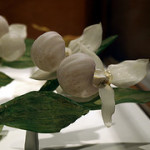
Glass Flower Model at Harvard Photo by John Pittman
Photo by John Pittman Flickr Everyone’s Photos Glass
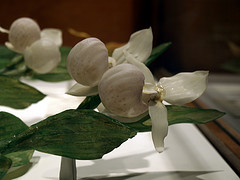
Leopold and Rudolf Blaschkas made these glass models between 1890 through 1936 shipping them from the family studio in Hosterwitz, Germany to Cambridge. Leopold died in 1895, but Rudolf continued on his own stopping only 3 years before his death. Rudolf had no children.

So the secret, it seems is to come from a family passionate about glass or at least, in the case of paperweight makers to pair passion and practice, with persistence and develop a keen awareness of hand and eye in relationship to glass on the end of a pipe.

The glass orchid in image was created by the Blaschkas for the Botanical Museum of Harvard University.
Filed Under: Recent Activities of Interest, Uncategorized Tagged With: Blaschka, paperweights

Broadfield House Museum

August 9, 2015 By Sue Soy

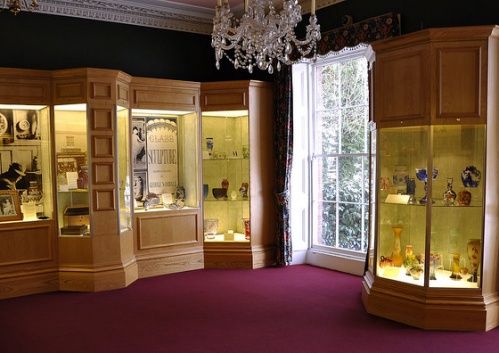
view of the inside of the Broadfield House Museum
Vew of the inside of the Broadfield House Museum, United Kingdom

Among the many glass museums listed on this website is the Broadfield House Glass Museum located in Kingswinford, England, operated by the Dudley Metropolitan Borough Council. Broadfield House contains glass objects dating back to the 17th century, among them paperweights. The tucked away museum is a former royal estate situated in a part of England known as the Black Country. The Black Country draws its name from the minerals in the ground: coal, iron ore, limestone, fireclay and sand; all perfect ingredients for the French glassmakers who long ago established their businesses in England. Travelers to this western portion of England soon learn about glass manufacturing hearing the names of Amblecote, Stourbridge, and Brierley Hill. The Red House Glass Cone in Stourbridge constucted at the end of the18th century is the last of the traditional glass works and now operates as a museum.  Today, it is the only complete glass cone in the area once filled with them and one of only four left in the United Kingdom. Some of the finer glass pieces produced in this area can be seen at the Broadfield House Glass Museum in addition to paintings that show this colorful landscape from the past and glass making tools. This museum is scheduled to close later this year and will reopen at a date yet to be announced with new exhibits.

Filed Under: Paperweight Historical Summary Tagged With: Amblecote, Broadfield House, Museum, Stourbridge, United Kingdom

Orchids In Glass

July 12, 2015 By Sue Soy

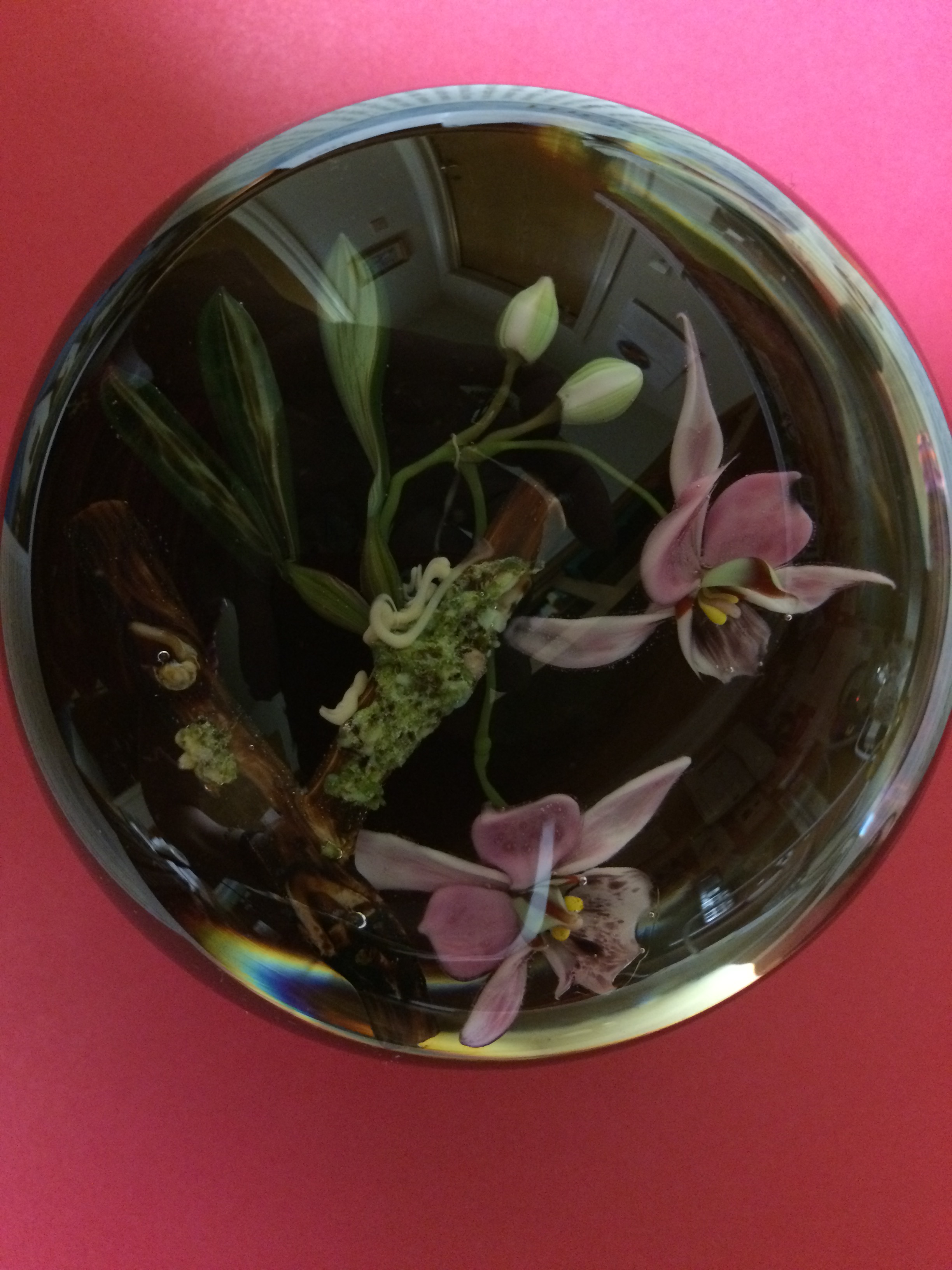
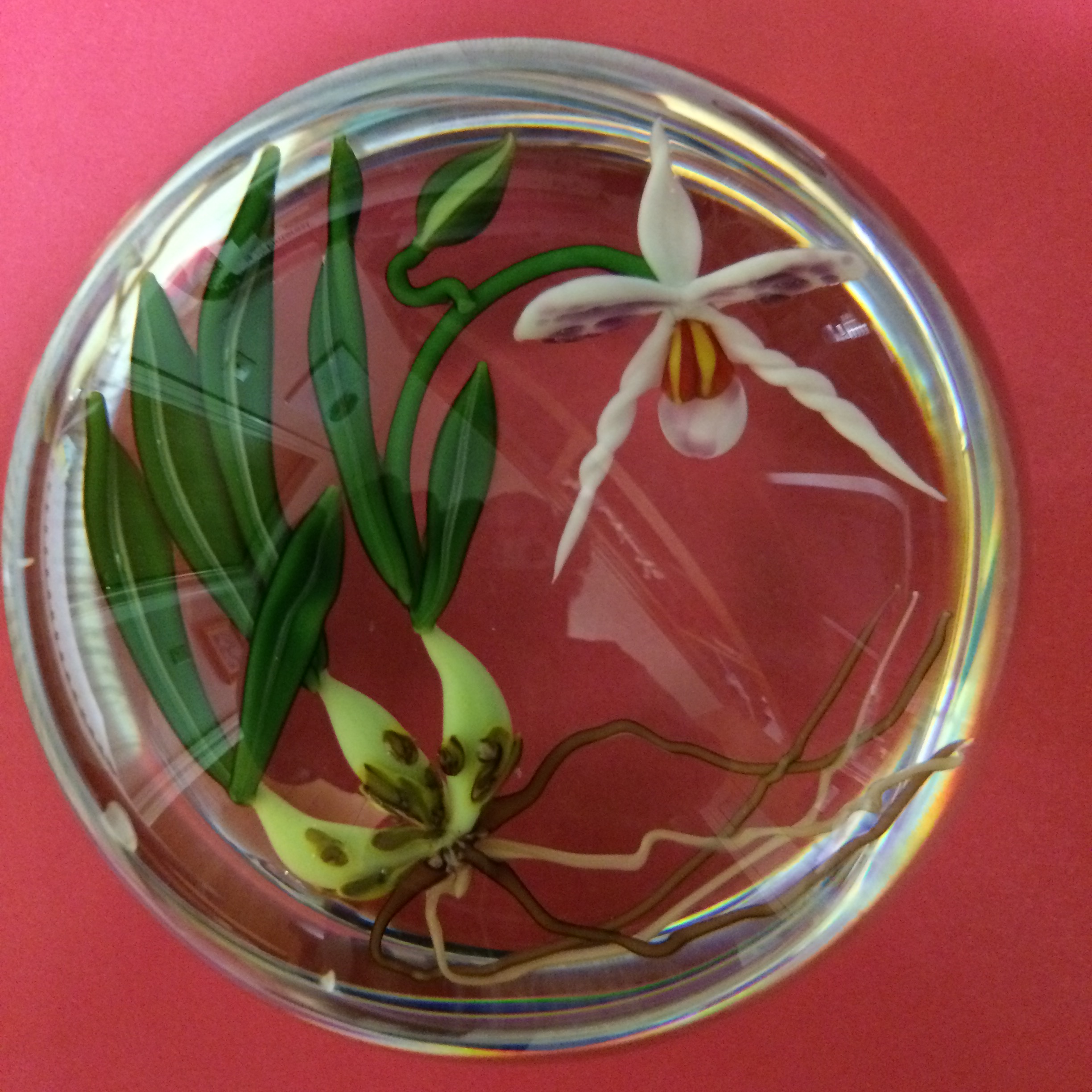
Artists and collectors alike are fascinated with orchids. Take for example Chris Buzzini, who recently has announced that after 45 years of working with glass that he is closing his studio in Oregon and will be returning to California. Chris began his adventure with glass in 1970 and has worked with Correia Art Glass, Lundberg Studios, and Orient & Flume Art Glass. He created his fabulous orchid series as an independent artist with his own studio and has filled many collections with paperweights over this forty-five years of work in glass.

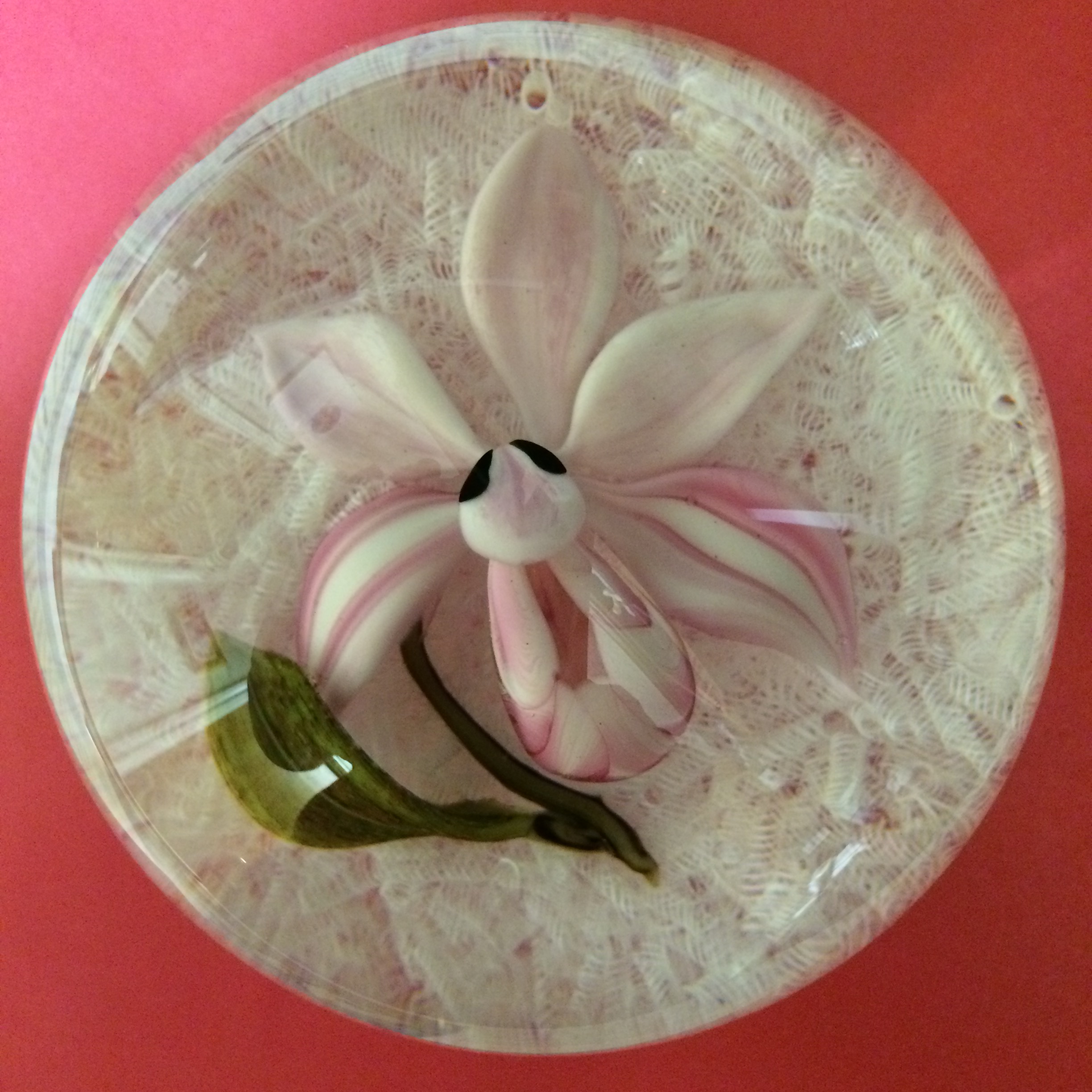
Another artist working with flowers and elements of nature is Paul Stankard. Paul Stankard has not just captured in glass the beauty of the life cycle of plants but  has also created whimsical poetic creatures to share with collectors and admirers of art in glass.  Paul writes beautifully about his journey in life in “No Green Berries or Leaves: The Creative Journey of an Artist in Glass” letting us all share his love for poetry, Nature, and work to to bring poetry into glass. Orchids have been featured in some parts of his work but honeybees, leaves, flowers of all types, berries, root systems, and entwined root people are found in his work.

Victor Trabucco sculpts in glass and is a magician. Like Buzzini and Stankard, his work is found in museums across the world. Trabucco’s paperweights visually demonstrate that his techniques developed over many years of working with fluid hot glass enable him to bring beauty to homes and offices in imaginative ways. Victor Trabucco has passed his art forward to David and Jon, his sons, who work at Trabucco Studios creating crystal sculptures and paperweights.

Chris Buzzini Orchid
Close up of Paul Stankard Orchid in glass
Paul Stankard Orchid
Paul Stankard Orchid Paperweight
Victor Trabucco Paperweight
Victor Trabucco Orchid 

Filed Under: Paperweight Historical Summary Tagged With: buzzini, stankard, trabucco

Playing Cards — Sale

July 5, 2015 By Sue Soy

A limited number of PCA TX Playing Card Double Decks are for sale illustrated with colorful paperweights. Get yours now. Limited stock  is available. Get Involved. Support PCA TX.

$7.50  per double deck in gift box plus $2.50 for shipping in the United States.

Filed Under: Recent Activities of Interest, Uncategorized Tagged With: Support

Rakow Research Library

June 26, 2015 By Sue Soy

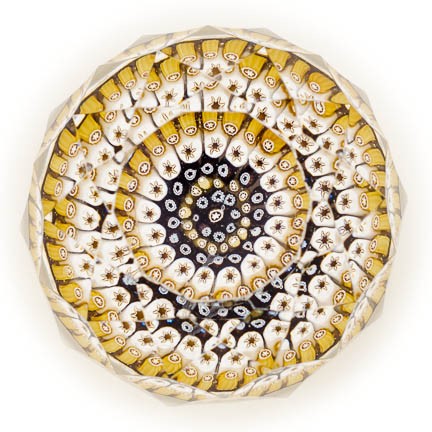
Whitefriars PaperweightThe Corning Museum of Glass in Corning, New York, is a very active Museum with an unequaled library and archives of materials concerning glass. Because of a very generous gift, a researchers will soon have available to them images from one of England’s oldest glass companies known to paperweight collectors as Whitefriars. The Museum of London acquired the Whitefriars’ extensive collection of design drawings and cartoons and because of space limitations offered them to the Corning Museum of Glass. The drawings and cartoons represent the Whitefriars Collection of stained glass drawings used to plan a stained glass window.  Now the Rakow Research Library will develop an innovative methodology for preserving and digitizing, and making accessible a collection of approximately 5,000-7,000 large-scale, paper-based designs of historical significance from the James Powell and Sons (Whitefriars) glass company.

PCA TX is also represented in the Rakow Collection with a sampling of issues of The Paperweight, the organization’s newsletter. Plans are underway to make the entire body of newsletters available to researchers at the Rakow Research Library. This will allow researchers to follow the history of the Paperweight Collectors Association of Texas, Inc.

Whitefriars Paperweight

Filed Under: Paperweight Historical Summary Tagged With: Rakow, The Paperweight, Whitefriars

  • « Previous Page
  • 1
  • 2
  • 3
  • 4
  • 5
  • Next Page »

Sponsors

Next Event

Everyone is welcome at the meetings of the Paperweight Collectors Association of Texas, Inc. We love to receive guests! We hope to see you there! Unfortunately our February meeting in Livingston has been canceled. For more information please check out our Events Tab

‘The Paperweight’ Newsletter

All members receive a newsletter, The Paperweight, published quarterly. - Click to Learn More!

Work by Eric Hansen

Copyright © 2026 · Paperweight Collectors Association of Texas, 42 W. Dansby Drive, Galveston, TX 77551
· President: Ted Glover · Vice-President: Marilyn Turner · Treasurer: Jan Whitley · Secretary: Claire Terry ·